The Quantum Future Requires More Than Physicists: Ona Ambrozaite on building bridges between science, industry, and society
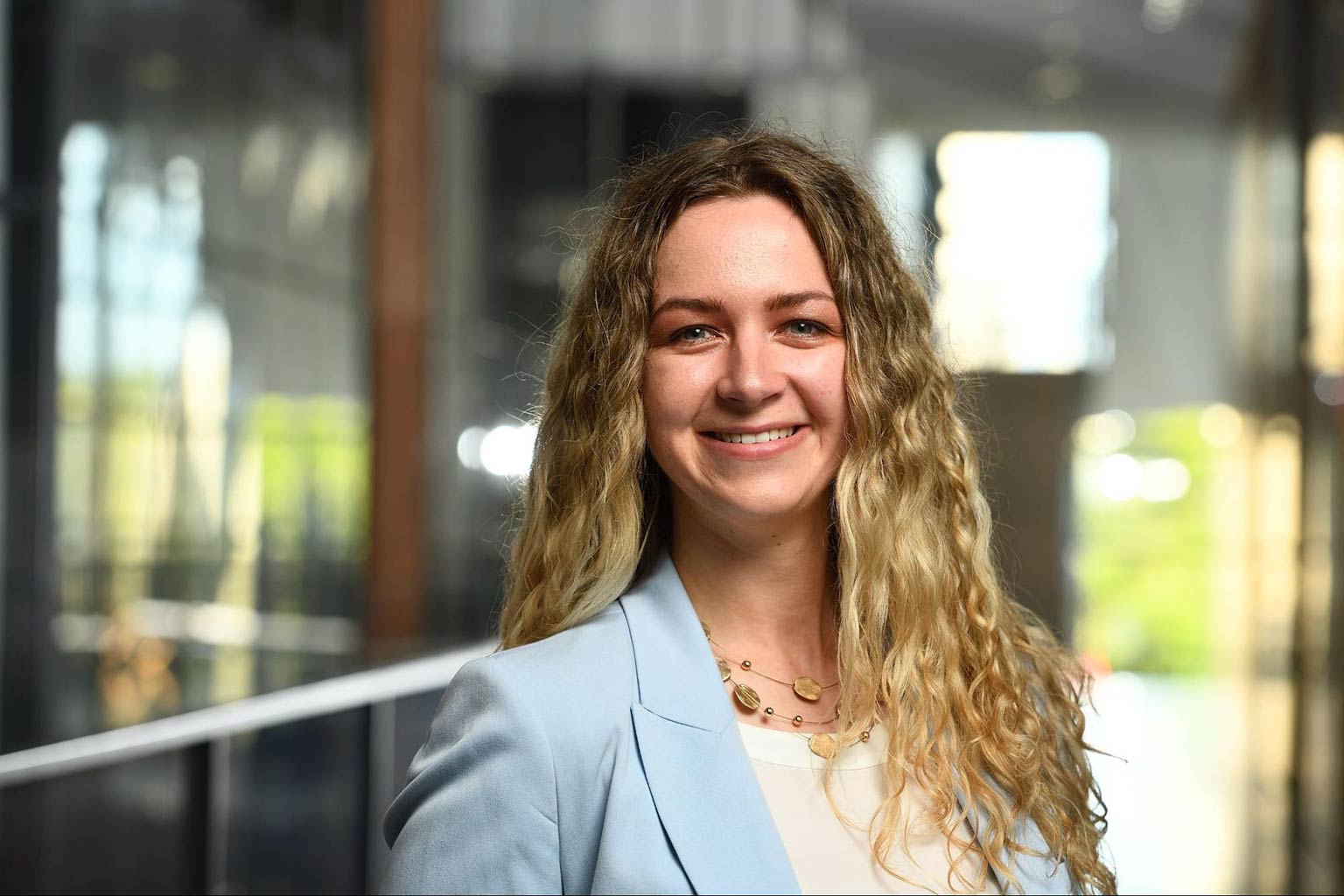
Quantum is having a moment. What was once considered a highly theoretical field confined to physics is rapidly becoming part of a much broader conversation spanning healthcare, computing, manufacturing, national strategy, and global collaboration. But behind the headlines and hype is a more important question: what does it actually take to build a thriving quantum future?
That’s exactly the kind of work Ona Ambrozaite is focused on every day.
As the newly appointed Executive Director of the Wisconsin Quantum Institute at the University of Wisconsin–Madison, Ona sits at the intersection of science, policy, industry, and international collaboration. Her background spans chemistry, quantum materials research, diplomacy, and ecosystem-building, giving her a uniquely broad perspective on where quantum technologies are headed and what it will take to move them from isolated breakthroughs into real-world impact.
In this conversation with FAR Biotech, Ona discusses why this moment in quantum feels different from past waves of excitement, what people often misunderstand about the field, and why collaboration across disciplines—from physics and engineering to policy and public engagement—will be essential to quantum’s future. She also shares her perspective on Wisconsin’s emerging role in the global quantum ecosystem and why the future of quantum will require far more than just physicists.
For anyone curious about where quantum is going (and who will help shape it), this conversation offers an accessible and thoughtful look at the people, partnerships, and ideas driving the field forward.
Your background spans chemistry, quantum materials, diplomacy, and ecosystem-building. Looking back, when did you first come across and what first drew you toward quantum science?
OA: I came to quantum science through this meandering path with chemistry and quantum materials. I was really fascinated by it during my Ph.D. in chemistry at Johns Hopkins, because I realized that all this fancy quantum mechanics isn’t just theoretical—it can actually explain how matter behaves and how new technologies become possible.
What I find really inspiring is that fundamental physics can translate into these real, tangible materials that I was working with. That further deepened my interest in connecting fundamental discovery to actual application.
I also started to see that, while we as scientists were talking about quantum science, the topic was also coming up more and more in policy and diplomacy circles. I think that was really crucial in shaping the commitment I’ve built my work around now at Wisconsin: building bridges between research, industry, and society more broadly.
There’s suddenly much more public attention around quantum technologies, including recent Nobel Prize recognition connected to demonstrating quantum effects at a macro scale. From your perspective, why is this moment different?
OA: I think we’re at a very different moment now than we were years or decades ago, when quantum was still primarily confined to the lab. Today, the scientific readiness, growing industrial capability, and government priorities are all aligning around what many call the second quantum revolution.
The moment for quantum is now because it has moved beyond isolated lab successes into coordinated national and international efforts. From a policy and diplomacy perspective, this convergence creates a rare window of opportunity to shape how the field grows—and to ensure it grows not only competitively, but responsibly as well.
That’s where my previous role with the UK Science and Technology Network was really interesting. It raised questions like: How do we think about these challenges ahead of time? How do we stay proactive instead of reactive when shaping standards and frameworks? Because whoever helps shape the standards will ultimately have a major role in defining the field itself.
What do you think people misunderstand most about quantum science right now?
OA: I think a lot of people assume that the progress we’re seeing in quantum hinges on one dramatic breakthrough, rather than years of steady, highly collaborative work.
Others still see quantum as this mysterious and inaccessible topic, when in reality it builds on a great deal of well-established science and engineering. That misunderstanding can sometimes distract from the importance of things like workforce development, standards, and long-term policy planning.
More people should understand that quantum is being built on technologies we already know and use today—semiconductor technologies, for example. Those foundations will continue to matter even as the future becomes more quantum than it is now.
We often hear quantum discussed in the context of computing, but there are many adjacent applications emerging as well. What areas are you personally most excited about?
OA: Obviously, quantum computing gets a lot of attention because of its enormous potential applications. But there are also companies, including FAR Biotech, applying quantum principles to areas like drug discovery in ways that don’t necessarily rely on quantum computers themselves.
Beyond quantum computing, we also have quantum sensing and quantum materials, which I find especially exciting because they’re already beginning to deliver very practical benefits. That can range from health diagnostics to navigation, energy systems, and security applications. In many cases, those advances may happen on a shorter timeline than large-scale quantum computers.
I also think quantum sensing, materials, and networks highlight something really important: quantum breakthroughs often emerge at the intersection of multiple disciplines. That’s one of the aspects of my role as Executive Director of the Wisconsin Quantum Institute that excites me most: I get to work across teams and help bring those connections together to make this work possible.
You’ve been in the Executive Director role of the Wisconsin Quantum Institute for a couple of months now. What opportunity do you see for Wisconsin and Madison specifically in the quantum landscape?
OA: Of course, being in this position, people could say I’m a little biased—but even objectively, I think Wisconsin has a really unique advantage.
We have the combination of fundamental research strengths at our universities, manufacturing expertise, a collaborative culture, and strong end-user industries here already—whether that’s healthcare, finance, or manufacturing. We have the full stack here, not just from a hardware-to-software-to-applications perspective, but also from the standpoint of the users themselves. Why are we doing this work? Who will ultimately use these technologies? I think Wisconsin is especially connected to that layer in a way that some other ecosystems are not.
Madison, in particular, has the opportunity to show how a region can build a true quantum ecosystem by connecting universities, startups, industry, and government. That model has implications well beyond the state, especially when it comes to inclusive innovation, because quantum is really hard to do alone.
We have a lot to offer. We just need to get out there more and make sure people understand the global impact the discoveries happening here can have.
You’ve described quantum as something that requires collaboration across disciplines and sectors. Why is that interdisciplinary approach so essential?
OA: Quantum systems don’t really respect disciplinary boundaries, which is why this work can’t happen in silos. We need physicists, chemists, computer scientists, engineers, and policymakers all working together.
That’s something we focus on heavily at the Wisconsin Quantum Institute. If you look at our faculty, you’ll see people working across physics, mathematics, statistics, engineering, and many other fields. Then my role comes into play in helping connect those efforts with policymakers and broader communities to make sure this work can actually become a reality.
My background in diplomacy reinforced something important for me: technical excellence alone is not enough without coordination, communication, and a shared strategy. Quantum progress will require long-term trust and alignment across sectors and even across borders.
That’s why interdisciplinary collaboration has to remain a top priority. It’s what allows sustained progress to happen, and it’s really what I spend most of my time working on every day.
If someone reading this is curious about quantum but feels intimidated by it, what would you want them to understand?
OA: What I’ve been trying to convey to people is that you don’t have to be a physicist to participate in the coming quantum future.
Quantum will need leaders in policy, education, business, and public engagement just as much as it needs scientists. And even within the sciences, people can come from many different backgrounds: physics, chemistry, engineering, computer science, and more.
Curiosity and perspective are some of the most valuable entry points into this field. They’re not prerequisites, but they matter. We’re going to need all kinds of people, with all kinds of backgrounds, to help shape the quantum future.
Is there anything else you would like to add?
OA: I think it’s important for people to understand that quantum is as much about how we collaborate as it is about what we discover.
The choices we make now—whether around policy, workforce development, international cooperation, or regional collaboration—will shape the field for decades to come. And honestly, that applies beyond quantum as well. If we get those choices right, then we also have an opportunity to build a stronger sense of shared responsibility around these technologies and where they lead us.
Discovery matters, of course, but collaboration matters too. We need to make the right choices now, because the quantum future is already beginning.
Thank you to Ona for taking the time to share her perspective on the evolving quantum landscape, interdisciplinary collaboration, and the growing role Wisconsin can play in shaping the future of quantum innovation. We’re grateful for her thoughtful insights and for the work she is doing to help connect research, industry, policy, and society around this rapidly advancing area of science and technology.


