Seeing the Lighthouse First: Why Max Duckworth believed that a Quantum approach could build a different computational drug discovery company
Drug discovery remains one of the most complex, costly, and uncertain pursuits in science. Even after years of R&D with eye-popping investment, many promising drug candidates never make it to patients—often because the early stages of discovery fail to produce the right starting points. Despite advances in artificial intelligence, the fundamental challenge remains to understand how small molecules truly interact with targets in the human body.
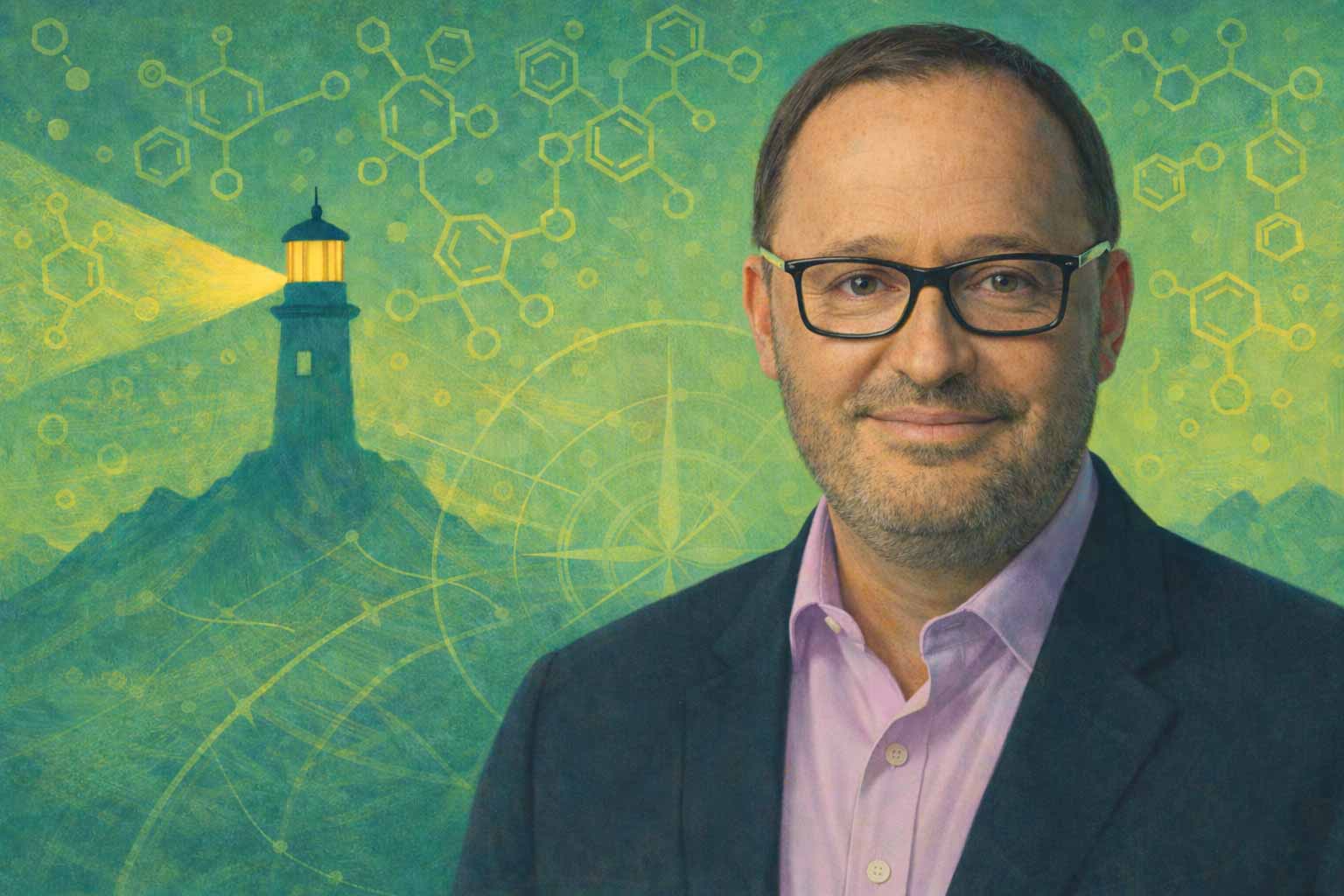
FAR Biotech approaches this problem differently. Its QuantumAI platform applies quantum mechanics—the fundamental scientific theory describing biomolecular interactions—to identify novel, drug-like small molecules that other methods wouldn’t look for, let alone find. The company’s name reflects that mission: FAR is the Bulgarian word for lighthouse, a beacon intended to guide discovery through uncertainty and opacity.
In this Q&A, we sit down with Max Duckworth, co-founder and a director of FAR Biotech, to explore how that vision took shape. With a background spanning particle physics, energy modeling, the senior executive ranks of a Fortune 250 company, and the scale-up of several companies, Max brings a complementary strategic lens to FAR’s work—and played a key role in encouraging founder Dr. Martin Martinov to transform decades of quantum modeling research into a company focused on hard-to-drug targets with high unmet medical need.
Max shares what first drew him to Martin’s unique QuantumAI approach, and why quantum mechanics—not AI alone—is the foundation of FAR’s platform. He also discusses how FAR thinks about target selection, risk management, and portfolio optionality through its “multiple shots on multiple goals” strategy.
Take us back to the beginning. What was the moment when you realized that Martin’s quantum work wasn’t just compelling science, but the foundation of a company?
MD: Once upon a time, I was pursuing an academic career in particle physics, during which time I knew a fair amount about quantum mechanics. So, many years later when I met Martin, I was struck by how unique and fundamental his approach was to drug discovery— applying quantum mechanics, which describes the behavior and interactions of subatomic matter, in a complete, rigorous, robust, yet practical way to drug discovery. That really blew me away.
Beyond the science, it didn’t take long to realize that Martin is himself a unique person with strong conviction, principled values and a healthy dose of self-awareness. He’s not only a brilliant scientist who has pioneered a quantum approach to drug discovery—but also a fascinating individual. He has a wide range of interests “ex silico” and a wonderful command of analogies and metaphors, whether he’s explaining drug discovery, quantum mechanics, or how to ascend a mountain.
What first struck you about Martin and his approach to science?
MD: What really stood out to me was that Martin truly believes in approaching science and discovery from first principles. You’ll often hear him talk about “first principles”—approaches that are devoid of heuristics, subjectivity, or layers of assumptions.
Martin is very fundamental in how he thinks, very mathematical. But to his credit, when it comes to drug discovery, he also understands the need to be practical—to identify and design small molecules that could realistically become drug candidates, given the constraints of the industry and world we live in today.
I believe that part of the elegance and brilliance of Martin’s approach stems from his early experience. More than 25 years ago, when he moved to the U.S. to pursue his PhD, computational resources were quite scarce – and much less powerful – compared to the present day. That scarcity forced him to approach problems fundamentally and efficiently, in a way that would still yield the correct answer with limited computing power.
What that translates into today is that FAR Biotech’s QuantumAI methodology isn’t just more fundamental or grounded in first principles—it’s also highly streamlined computationally. And that’s increasingly important today because while many assume that access to AI and cloud computing will be quasi-limitless, I don’t believe that will be the case.
As demand for AI surges, we’re already seeing limitations around data center interconnections and grid infrastructure. There simply won’t be enough power resources on the grid to support everything people assume will be possible with AI. But that’s a longer conversation.
At the end of the day, QuantumAI requires a fraction of the computational resources of other AI-driven approaches, which not only helps to “future proof” the approach, but also allows FAR Biotech to investigate enormous chemical spaces in our quest for novel small molecule drugs. With QuantumAI, we are able to search order of hundreds of billions or trillions of NCEs – or new chemical entities – for a particular target over the course of a couple of months (more about this later.)
How do you explain QuantumAI—and why it matters—to people who don’t come from physics or drug discovery?
MD: QuantumAI, as the name suggests, is a combination of quantum mechanics and artificial intelligence. Here, “quantum” refers to quantum mechanics which, as mentioned, is the scientific theory that explains the behavior and interactions of very small matter.
Quantum mechanics is the science that underpins a large number of inventions and applications over the past 75 years that we take for granted today. Everything from the transistor and semiconductor – which of course led to modern-day chips—to medical imaging such as MRIs and CTs, GPS, lasers, and even the LEDs that light up your house.
In drug discovery, the relevance of quantum mechanics is very direct. When a small molecule interacts with a protein target in the body—which is essentially how drugs work—it’s the interactions between the outer electrons of the molecule and the target, or the molecular electron densities, that determine whether the drug binds to the target and can treat or cure disease. Quantum mechanics can even help to determine the desirable pharmacological properties you want to see in a drug, for example, whether it’s safe and suitable for use in humans.
Back to QuantumAI, the “AI” reference therein is essentially deep-learning artificial intelligence using something called “fuzzy logic” to accelerate our quantum calculations and predictions. Martin’s approach is proprietary and significantly more sophisticated than much of the AI that’s deployed in drug discovery today.
What problem do you feel QuantumAI is uniquely positioned to solve that other computational or AI-only approaches couldn’t?
MD: That’s a really important question. Sometimes Martin jokes—self-deprecatingly—that he knows “nothing about biology or chemistry” which, of course, isn’t true. What he means is that he approaches everything from first principles.
If you were to start from scratch and think about drug discovery at a very fundamental level, it would boil down to the interaction of the outer electrons, or molecular electron densities. Those interactions are difficult to calculate precisely, which is why we create what we call “quantum objects”. That’s really the foundation and breakthrough of QuantumAI.
More broadly, the way AI is used in drug discovery today tends to fall into two categories. One is what I would call a top-down approach. In that case, you can think of AI as an army of interns that is able to access, review, and hopefully uncover patterns or relationships from the entire body of medical and drug discovery research that’s ever existed – very rapidly! That’s powerful, but fundamentally a correlation exercise.
The other approach is bottom-up, which is more model-based. In that case, AI is used to supercharge or improve existing models of how a small molecule interacts with a target in the body. Often, that means using AI to compensate for models that are based upon approximations or, in some cases, deficient for the problem at hand.
What’s different about our approach is that we’re not relying on AI to “fix” anything. We’re starting with the fundamentally correct, physical theory—quantum mechanics—and defining “quantum objects” very accurately. Our “deeptech” AI is then used to accelerate those calculations, not to correct or compensate for underlying assumptions.
What’s something about FAR’s culture or process that would surprise people, especially those imagining what a quantum drug discovery company looks like on the inside?
MD: I would characterize FAR Biotech’s drug discovery workflow as an iteration between in silico and in vitro / in vivo work. What that means in practice is that once we’ve selected a target—which has to meet a number of internally-specified scientific, practical and commercial criteria—the initial phase is computationally intensive.
Martin and the bioinformatics team build a quantum model to represent the drug-target combination in quantum space. From there, as mentioned previously, we search different chemical libraries—that is, very long lists of different chemical structures—to identify quantum “matches”. Because this is done in quantum space, it’s orders of magnitude faster and more streamlined than traditional biochemical or molecular modeling approaches – with the added benefit, I should add, that two structures that “match” or appear similar in quantum space won’t necessarily be similar in actual biochemical space (as evidenced by low Tanimoto scores). And this is basically why QuantumAI can identify novel, chemically differentiated, small molecules for a given target.
After that, there’s a significant amount of complementary scientific judgment involved. The hits we identify in silico are simply computational predictions—nothing more than that. They need to be validated experimentally. We spend a lot of time as a group deciding which chemical structures to prioritize, procure or synthesize, and test.
Then there’s always a bit of suspense as we wait for the experimental results to come back. Almost invariably, there’s some level of surprise and excitement when we see which small molecules turn out to be active against the target—those that show potency and could one day become drugs.
That’s really the intrigue of the QuantumAI approach. We’re not only looking in places that other methods wouldn’t go—we’re finding novel small molecules that other approaches simply wouldn’t find. From there, we feed the experimental results back into the QuantumAI model, “turn the crank” again, and iterate, with the goal of arriving at more potent, more optimized, small molecules that can be progressed towards key development milestones.
Your background spans physics, energy, executive leadership, and scaling companies. How has that shaped the way you guide FAR’s strategic direction?
MD: I do have some background in natural sciences, and I have used my physics training throughout my professional pursuits, often in ways I wouldn’t have predicted. I’ve been involved in complex modeling efforts, where it is important to understand the “signal versus the noise”—what is actually important, how to collapse a problem with its many moving pieces into a smaller number of key variables or drivers that matter, and what the limitations or approximations of the model are. There’s also a fair amount of judgment involved—left-brain and right-brain thinking—in terms of how you interpret complex models.
Then I think about how my corporate experience kicks in with FAR Biotech, bringing together the various pieces, keeping the trains on the track, trying to think a few steps ahead, anticipating rather than reacting. I’ve always enjoyed building and developing teams with the objective that the whole be greater than the sum of the parts.
FAR’s strategy focuses on “multiple shots on multiple goals.” How do you decide which targets to pursue first, and how do you think about building optionality for investors?
MD: By “multiple shots on multiple goals,” we mean that we aim to identify one or more novel small molecules that are progressible and drug-like for each of a number of diverse targets. That way, our investors are not reliant on “a single shot on goal”, which is often the case with biotech companies.
When it comes to target selection, that’s one of the most important and highest-risk decisions we face. We know empirically that QuantumAI will find in silico hits that are validated in the lab—that is to say, small molecules that exhibit activity against a given target. But for a lean company like FAR Biotech, there’s a significant opportunity cost to pursuing any given target, given the inherent human and computational cost. We can’t pursue ten targets at once, at least not right now!
We’ve gone to some length to define clear target selection criteria. First, the target needs to be scientifically and commercially interesting. It needs to be hard-to-drug, it needs to be associated with indications that have high unmet medical need. The target also needs to have well-understood biology. In other words, if we find small molecules that are active against the target, do we have a high level of confidence that this bioactivity could translate into treating or curing disease? We try to minimize risk around target biology.
We also prefer targets that have been studied extensively in the industry, where there is a meaningful amount of data in the public domain that we can leverage to build and train our quantum models. That data, both positive and negative, is very important to the modeling process.
Finally, we think strategically about which targets could lead to a partnership or licensing agreement with industry that could happen relatively earlier in the development cycle—precisely because they are hard-to-drug and have high unmet need. We try to avoid a situation where we discover good-looking small molecules, only for folks to say, “Who cares?!” We’re essentially trying to skate towards where the puck will be six to twelve months down the road.
So there’s a significant amount of internal and external vetting that goes into target selection. Finally, we’re conscious of building a portfolio of diverse target classes to mitigate concentration risk among targets, while at the same time demonstrating the robustness and versatility of our QuantumAI approach.
Drug discovery is known for being slow and risky. What convinced you that quantum mechanics was the missing piece—and not just another computational tool?
MD: As we’ve discussed, if you were to start from scratch with a blank slate, taking a very fundamental, first-principles approach, you would pretty early on arrive at the interaction of the outer electrons between the small molecule and the target. That’s really where quantum mechanics comes in.
When FAR Biotech was formed, there were already efforts underway to apply AI and machine learning to drug discovery, mostly in the ways I described earlier. But to my knowledge, there was very little information in the public domain about the rigorous application of quantum mechanics to drug discovery.
The beauty and promise of QuantumAI is that it simplifies and cuts through the complexity of drug discovery and reduces it to a key number of local interactions—less than 10—between the small molecule and the target. This is very powerful when one thinks about the sheer number of atoms and different types of chemical interactions between a protein and a small molecule. That was really what resonated for me.
If you had to describe FAR Biotech as a lighthouse, what is the beam of light you hope it casts—scientifically or culturally? What impact do you hope FAR will have on patients, partners, and the wider biotech ecosystem over the next few years?
MD: We all recognize that drug discovery has historically been a slow, stepwise, costly, and risky endeavor. Even after many years of R&D and hundreds of millions of dollars invested into small-molecule assets, there’s no guarantee that a drug candidate will ever see the light of day.
Against this backdrop, we’re encouraged that using QuantumAI we’ve been able to identify and progress different chemotypes – or chemical structures / scaffolds – that are active against a number of biologically diverse, hard-to-drug targets. This is our “multiple shots on multiple goals” strategy at work. There’s still plenty of work ahead and it’s obviously our goal that we’re able to partner with industry to advance these small molecules into the clinic so that they can one day become approved drugs that cure patients.
It’s also my hope that as quantum becomes the next big wave in many areas including drug discovery, Martin and the FAR team are seen as early adopters and that our QuantumAI technology can shine a quantum light for others to follow and build upon our fundamental, first-principles approach to drug discovery.
This conversation offers a window into how FAR approaches one of the hardest problems in drug discovery—starting from first principles, making disciplined choices, and staying oriented amid uncertainty. We’re grateful to have Max on the FAR Biotech team. His steady, thoughtful approach helps FAR stay focused on what matters most as the company charts its path forward and builds a portfolio with “multiple shots on multiple goals.”


