The Story Behind the Search: Martin Martinov on quantum pharmacophores and a differentiated approach to drug discovery
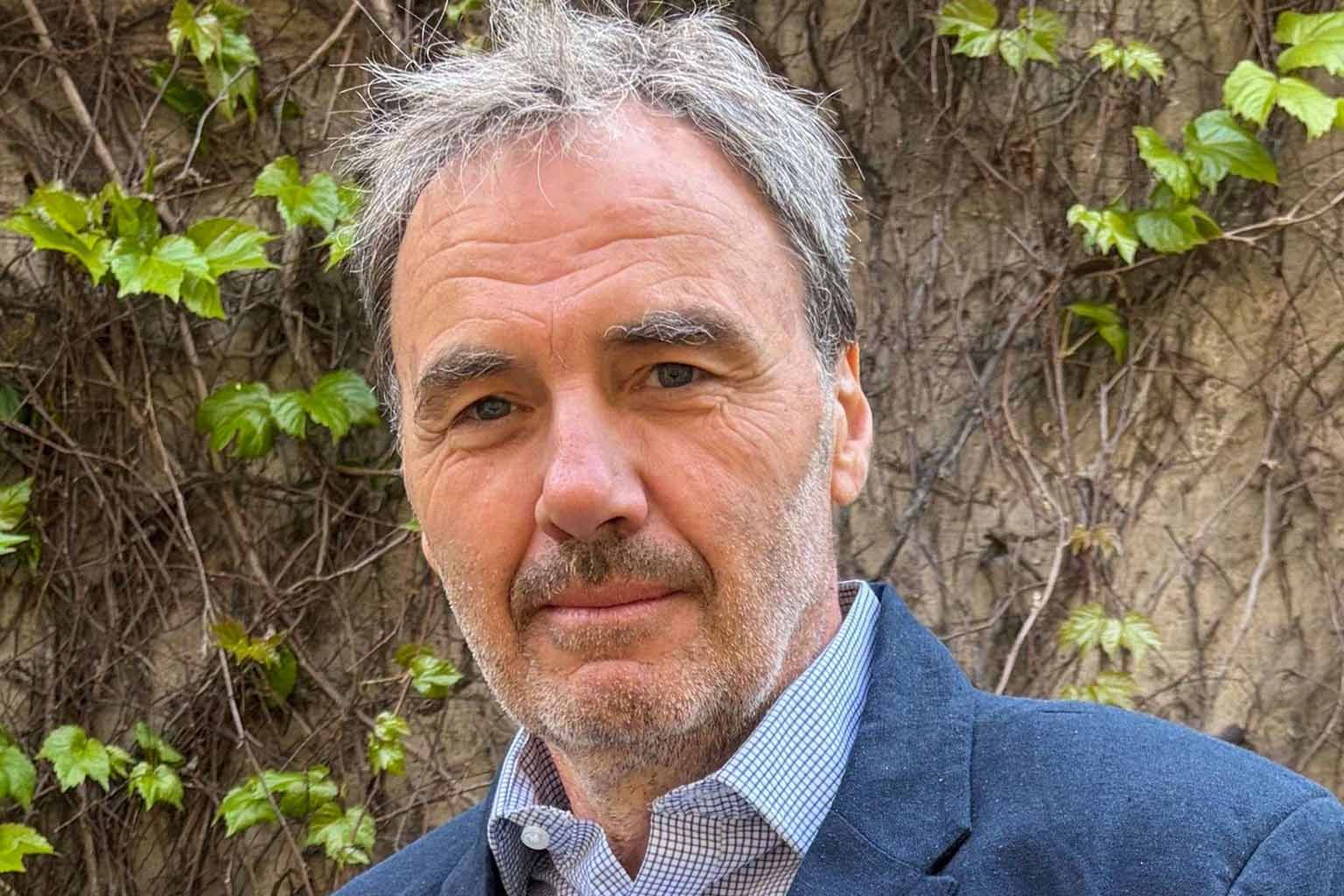
Drug discovery is often described as a search problem: identify the right molecule, for the right target, among an almost unimaginably large universe of possibilities. Dr. Martin Martinov approaches that search a little differently. As a computational chemist and founder of FAR Biotech, he has spent decades looking beyond the conventional map—using quantum mechanics to illuminate drug-target interactions other approaches may not see.
Martin is lead author of a newly published paper, “Quantum Pharmacophore-Based Virtual Screening Enables Prospective Discovery of Chemotype-Diverse Dengue NS5 Inhibitors,” in collaboration with researchers from Johnson & Johnson and the Structural Genomics Institute at the University of Toronto. The study focuses on dengue, a major global health challenge responsible for an estimated 96 million infections and approximately 40,000 deaths each year.
The researchers applied what they call a quantum pharmacophore—essentially a quantum mechanics-based map of the key molecular interactions involved in binding—to challenging, highly flexible sites in a protein essential to dengue virus replication. The approach was used to screen 43.8 million compounds and identify chemically diverse inhibitors that were then tested experimentally.
We used the publication as an opportunity to go beyond the results and ask Martin about the why behind the work: why neglected diseases matter to him, how he thinks about difficult scientific problems, what this research may demonstrate beyond dengue, and where he believes drug discovery is headed next.
What emerged is a conversation about exploration itself—how looking at one difficult problem differently can sometimes illuminate a path toward many others.
You’ve spent years working at the intersection of theoretical chemistry and drug discovery. What made dengue the right case to showcase this deeper scientific framework now?
MM: It wasn’t dengue specifically that led to the framing. It was really this particular collaboration and the methodology we were using.
In conversations with my collaborators at Johnson & Johnson—Dr. Chandrika Mulakala in particular—she suggested that we describe the approach as a quantum pharmacophore. That resonated with me immediately. People in drug discovery already understand what a traditional pharmacophore is, so I think “quantum pharmacophore” provides a very intuitive and visual way to represent the theory behind what we are doing.
That was why this felt like the right time to begin describing the methodology in those terms.
For someone outside the field, what makes this kind of antiviral discovery so difficult?
MM: I wouldn’t want to generalize about antivirals as a whole. I’m approaching this from the perspective of a modeler, not a biologist.
In this particular case, we were looking for active compounds that could bind to a relatively poorly defined, highly flexible binding site. That is typically a challenging modeling problem.
Dengue is a major global health challenge, but it is also the kind of disease the market often under-serves. Why was it important to you to apply this work to a neglected or tropical disease?
MM: There is a lot to be said about underserved populations and about why neglected diseases are called “neglected” in the first place.
Work in neglected diseases has always been important to me. This is not my first project in the area. I have also worked on liver- and blood-stage malaria and African sleeping sickness.
So, in general, when I see an opportunity to contribute in a meaningful way to work on a neglected disease, I tend to jump at it.
What has made the human impact of neglected diseases tangible for you personally?
MM: I have visited countries in Asia, Africa and South America where neglected diseases are part of everyday life, and that is probably a large part of why I have always been interested in working on them.
I don’t really want to get into specific stories because I tend to get emotional when I do. But what we consider normal health outcomes can look very different in other parts of the world. Something as basic as an infection, a diagnosis or even basic access to medicine can have very different consequences.
In that sense, I think the term “neglected” disease is actually very meaningful. We are neglecting a very large part of the human population. Regardless of how distant these problems may seem to us, I think we should be paying more attention to them and giving them more effort.
Are neglected diseases necessarily more difficult scientific problems to solve?
MM: Not necessarily. Although I am not an expert or authority on infectious disease broadly, I am not convinced that some of these diseases are scientifically more difficult than many of the unmet medical needs that receive considerably more attention.
A disease does not necessarily become neglected because the scientific problem is more difficult. There are also economic realities that determine where drug-development resources are concentrated.
What does this publication tell us beyond dengue? What does it demonstrate about the broader class of problems this technology can address?
MM: As a modeler, I don’t really think in terms of diseases or disease areas. I think in terms of modeling problems and classes of modeling problems.
In this case, we were dealing with a flexible binding site with very specific electrostatics. If the technology can work for this challenging problem in dengue, then it is reasonable to think that it could work for a much larger class of similar problems—including targets in cancer, immunology, and other disease areas.
That is an important takeaway for me. This is not simply a result in dengue; it is a validation of our quantum biomodeling technology against a particular class of challenging drug targets. In fact, one of the assets we are working on at FAR Biotech involves this same general class of modeling problems.
During the pandemic, what did you learn about the way the scientific community approaches urgent drug-discovery problems?
MM: The main thing it reinforced for me was that we need to collaborate better.
When there is a real reason—and an urgent reason—for people to work together, things can happen much faster. During the pandemic, we saw research resources coming together across academia, industry and government, and the unprecedented results followed.
When I say “we,” I really mean the scientific community broadly. I’m not trying to make a public policy point. Here I mean researchers and organizations finding better ways to combine their expertise, resources and capabilities around a shared problem.
How do you develop intuition in a field as abstract as computational chemistry?
MM: Especially in more abstract fields, intuition develops by spending a lot of time thinking about a problem as well as working on multiple problems over time. Sometimes that involves trial and error, but it still has to happen within a rigorous and objective process.
That combination is important. Scientific research does not offer much instant gratification, but it can be deeply gratifying over time. I’m not sure we always teach that very well. Science can seem difficult, but I don’t necessarily think it is. I think it often just takes time.
Looking ahead, where do you think the biggest advances in drug discovery will come from?
MM: We need better data, especially across the life sciences, but we also need better ways to interpret that data and build theory around it. Better models and better physics matter as well.
At the end of the day, I think the real progress will come from combining all of those things thoughtfully—making each of them as good as we can individually, and then finding creative ways to bring them together.
Thank you to Martin for taking the time to share the thinking behind this research and a deeper look at the curiosity, rigor and sense of exploration that continue to shape his work at FAR Biotech.


