Inside Wisconsin’s Biohealth Engine: A Conversation with Jessica Martin Eckerly
Breakthroughs in drug discovery don’t happen in isolation. They emerge from ecosystems where scientists, founders, operators, investors, and infrastructure come together to turn early ideas into real-world impact. And increasingly, that ecosystem is taking shape far beyond the traditional coastal hubs.
At Forward BIOLABS in Madison, Wisconsin, that convergence is happening every day. Startups are launching experiments within weeks instead of months. Founders are navigating funding, regulation, and scale alongside peers facing the same challenges. And a new generation of companies spanning therapeutics, diagnostics, AI, and computational drug discovery is beginning to take shape.
For FAR Biotech, which is headquartered at Forward BIOLABS, this environment is more than just physical space. It’s part of a broader system enabling greater immersion, faster iteration, smarter science, and new approaches to some of the hardest problems in human health.
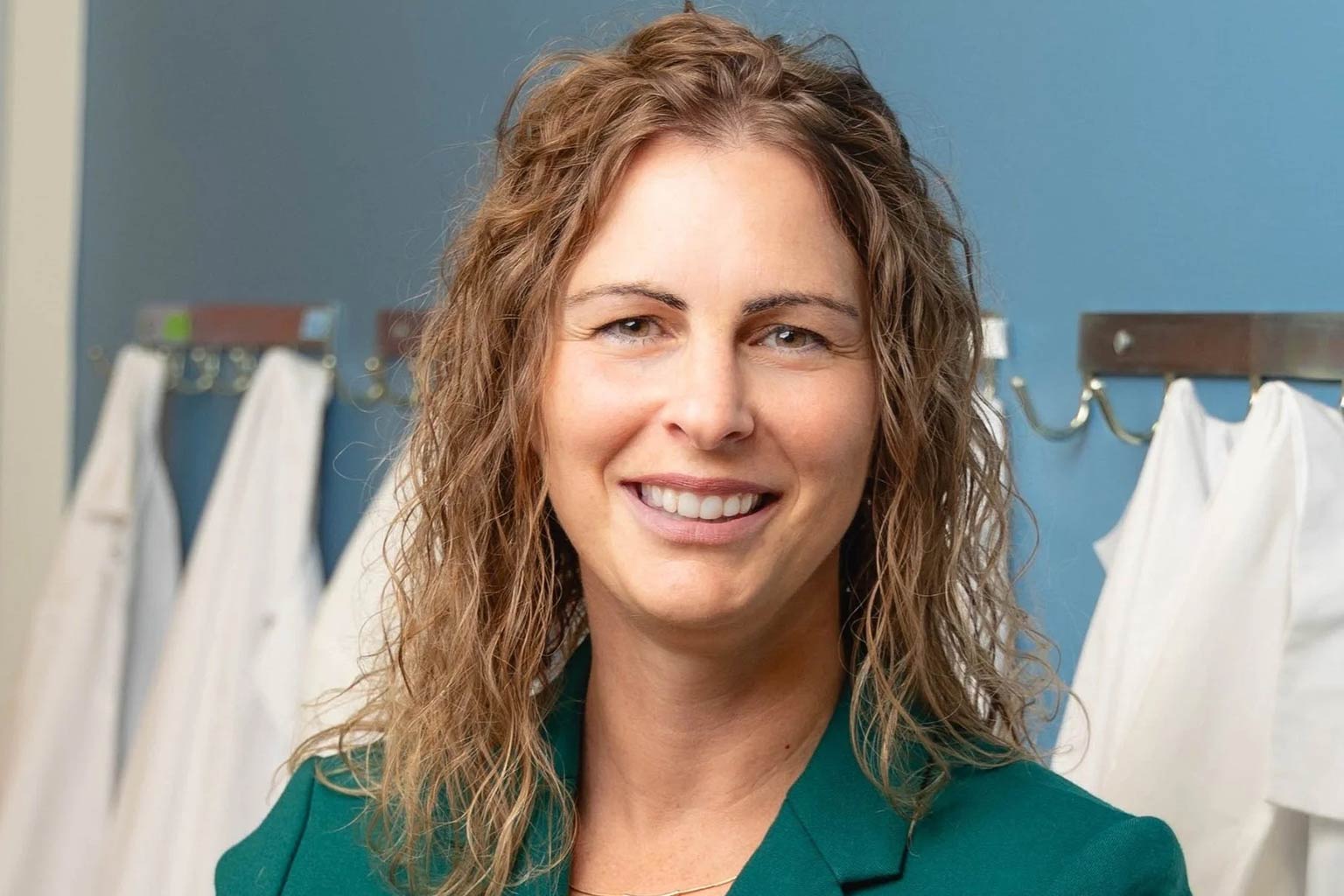
Few people have a better vantage point on this than Jessica Martin Eckerly, Co-founder and CEO of Forward BIOLABS. In addition to leading one of the Midwest’s most important life science incubators, Jessica serves as an adjunct professor at University of Wisconsin–Madison, mentors startups through Creative Destruction Lab, and is a Steering Committee member of the Wisconsin Biohealth Tech Hub—one of 31 federally designated hubs advancing U.S. leadership in biohealth.
Her perspective spans the full lifecycle of early-stage companies, from first experiments to fundraising, from lab infrastructure to long-term ecosystem building.
In the conversation below, Jessica shares what she’s seeing across early-stage biotech, ranging from what separates companies that gain traction, to why Wisconsin’s breadth is becoming a competitive advantage, to how AI and computational approaches are reshaping drug discovery. She also offers a grounded look at what it actually takes to build in this space and why she continues to be inspired by the people doing it.
You have had a front-row seat to dozens and dozens of early-stage life science companies. What patterns do you see among the startups that gain traction versus those that struggle?
JME: I think a lot of traction, or lack of traction, with startups relates to where they are in their journey. A lot of startups in Wisconsin start with SBIR grants. That helps them get non-dilutive funding to further the technology in some way, either alongside raising some angel and venture capital, or before that as a de-risking step of sorts.
But in general, when a company is out fundraising, some of the things that help success are really understanding what can be done next. What’s the next step that produces value? Is it a certain set of data that de-risks the technology? Is it a minimum viable product? And it’s going to take XYZ capital to get there—the companies that have that really well defined, and have the budget defined around that, tend to do well.
Fundraising in Wisconsin and also outside of Wisconsin can be a bit of a double-edged sword. Even domestically, fundraising on the coasts adds cost and expense. Oftentimes, initial capital can come from Wisconsin or the Midwest, and in some ways that makes sense because it allows for a stepwise approach. You get capital, you make progress, and you build toward raising money outside of Wisconsin.
But in general, the founders who aren’t afraid to get out there and really put themselves out there on a Midwest, national, or even international scale, are the ones who cast the biggest net. And those are the ones who usually find success with a mix of funding groups.
Many people still associate biotech ecosystems with the coasts. As a consortium member of the Wisconsin Biohealth Tech Hub, you’re helping position Wisconsin as a center for personalized medicine and biohealth technology. From your perspective, what are the areas where Wisconsin is already strong, and where do you see the biggest opportunities for more upside?
JME: That’s a fun question. Wisconsin is strong, very broadly, in biohealth. One of the unique things about Wisconsin is that when you look at the kinds of companies we have across biohealth, the span is pretty wide-ranging. You have everything from software with Epic, to research equipment, tools, and reagents with Promega, to diagnostics with Exact, and Gilson—another international company on the lab reagents and equipment side.
So we’re pretty broad. In addition to that, you have FUJIFILM Cellular Dynamics with stem cells, and all of the depth in contract manufacturing and contract testing: PPD Thermo Fisher, Labcorp, Catalent. We have so many of the ingredients, and that’s not even to mention supply chain.
You don’t always see that, even in some of the bigger hubs. They can be more focused around younger companies or specific modalities. California, for example, does a lot around cell therapies and cell-based approaches. The East Coast—Boston—has a lot around small molecules. We’re pretty broad, and that is a big strength of the state. I think that’s part of the personalized medicine and biohealth designation.
We also have unique strengths in imaging and radiopharmaceuticals. Medical physics at UW-Madison is second to none. And then there are some of the more emerging areas. I would put quantum in that category, with what FAR Biotech is working on. AI, at this point, underpins just about everything, either making things more efficient or identifying better leads, like FAR is doing.
Where is the biggest upside? I think for investors, what they get when they invest in Wisconsin is essentially a discount. And I know this. We’ve worked with over 65 companies, not to mention all the founders we’ve talked with that either haven’t started yet or young companies that are in other parts of the country.
We have a labor pool in the greater Madison area that is second to none, from technicians to world-class, PhD-level scientific expertise, along with the operational expertise needed to run a biohealth company across quality, regulatory, and operations.
What comes with that is cost of living. When you compare Madison to Seattle, San Francisco, Boston, or New York, you get a lot of bang for your buck. We’ve heard that consistently when companies at Forward BIOLABS are out fundraising. There’s feedback like, “Wow, you’ve been able to accomplish a lot and you haven’t raised very much,” or “You’ve come a long way without needing to raise huge amounts of capital like coastal startups.”
I think it shows the value that’s created in Wisconsin. We are value creators. We like to get to work. People work really hard here. We’re used to doing things on a shoestring, and if you give us an inch, we’re going to go a mile and go as far as we can.
I think that’s part of the culture and part of the ethos here. We do need to be standing up and talking more about what we’re doing, which is why it’s really great that you’re doing the blog and this kind of work.
I think it’s also a real testament to the strength of this ecosystem that the EDA, out of hundreds of applicants, selected Wisconsin as one of just 31 Tech Hubs, and that designation is in biohealth.
That recognition is because of the breadth and depth of the industry here. And that industry comes from the deep talent pool and the scientific expertise we have in the state.
We all know that we’re strong, but it’s meaningful when an external group comes in and recognizes that.
Through Forward BIOLABS, you’ve lowered one of the biggest barriers in biotech: lab access. Why is “science on day one” so critical for early-stage companies?
JME: It just enables companies to move so much faster. If you have to take the time to raise that much more money to get to a point where you can sign a lease, buy all your equipment, and set up your operations, it typically takes six to twelve months just to raise the extra money and get everything set up.
That’s why these kinds of environments have been so effective and so popular, and frankly, why they’ve proliferated from the coasts inward. We were a first mover outside of the coasts, because there were very few of these between the coasts when we started.
And it’s fun to see now, eight years in, all the companies that have graduated and continued on with the help they’ve gotten here.
At the end of the day, we’re just a stop on their journey. We hope every company that starts here flies our nest and creates their own. That’s the intent for all of our companies.
But we stay very focused on the companies we’re working with to make sure they have what they need—especially our Operations leaders Mike Polewski and Bianca Fung. In the lab, we always say safety first, and then whatever it is that our startups need to keep them going. Because any time something breaks, or they don’t have access to something they need, even something as simple as a freezer, a different rotor for a centrifuge, or a whole new machine, it can slow them down weeks or months.
When we can provide something the next day, or get them access in a couple of days, it just saves weeks, in addition to the money.
You mentor companies through Creative Destruction Lab and engage with early-stage investing groups. How has the funding landscape shifted in the last few years for biotech founders and how do you see 2026 for fundraising?
JME: For companies here, especially those applying for grants, that has slowed down. I think there’s been what will ultimately be a pause on the federal SBIR side. But on the angel and venture side, there are still investments being made to founders who are ready for the capital and who are out there knocking on doors.
I think the best way to put it is: the founders who are ready and equipped to take an investment, utilize it, and then go do it again are the ones who are getting funded.
Even when things slow down, there are still companies making headway. It may just be that, instead of 15 out of 25 founders getting funding in a stronger year, maybe only 10 do in a tighter market where capital isn’t being deployed as broadly. There are still companies moving forward.
From your vantage point, what role do computational and AI-driven approaches now play in early-stage biotech, and what excites you about that?
JME: I think there’s a lot going on, at least from what we see here with some of the companies that are in Forward BIOLABS and those that have graduated. Many are using AI alongside other technologies to enhance target identification and to speed that process, either identifying targets more quickly, or once you identify a target, helping determine whether it’s the right one, or characterizing it in a way that makes the whole process faster.
It will be interesting to see how this plays out. There are a lot of companies working on different avenues of this—FAR Biotech being one—and it’ll be interesting to see in the coming years which of those approaches pan out.
I do think we’re going to see successes, because there’s a lot that can be done here. If you can more firmly identify a region of interest and match a molecule to it, or if you have a molecule and a way to more accurately determine whether it will bind, that can yield data that we didn’t have before.
That means you don’t have to rely as much on animal studies or human studies. You have more data before you get to those points.
I think it’s going to be an exciting several years as these companies move forward and prove out their models. And I think there are several of these kinds of companies in Wisconsin and in Madison, which is a great thing. It means there are like-minded people working on that piece of value creation in the system.
Forward BIOLABS houses companies across biohealth, medtech, cleantech, and more. How do you cultivate a collaborative culture across such diverse scientific disciplines?
JME: We start with screening. We screen all of the companies as they come in, and we’re looking for both scientific fit in the lab from a safety perspective, and team fit, because you are working alongside people both in the lab and in the office.
Not every company at Forward BIOLABS is in the lab. At any given time, we usually have about a dozen that are only working in the office, but they still enjoy the environment because they’re in a like-minded group of founders—companies with long product development timelines, high capital needs, and regulatory hurdles.
We try to run Forward BIOLABS as a place where you can come meet like-minded people and collaborate, mostly so that you’re not on an island. That’s one of our biggest goals.
It’s not a free-for-all at all. This is actually a pretty closed environment. We do that both for safety and so that it’s not a constant commercial, because everybody is inundated with information all day, every day.
So we focus on helping people who work here meet each other and connect with others who are doing similar things, so they can have conversations. Sometimes that’s really deep science that’s way above my head, and other times it’s talking about licensing, fundraising, or who they know.
We also have companies that work together here. They become service providers for each other. And I think that’s another testament to how integrated not just the community is, but the overall biohealth ecosystem in Wisconsin.
When you look ahead 5–10 years, what developments in biohealth or personalized medicine are you most excited about, especially here in Wisconsin?
JME: I think one of the things I’m most excited about is that we’re at the start of this shift toward more personalized medicine.
Elephas Bio is a company working on this in immuno-oncology, a tangent to FAR Biotech, to so many companies, but this idea of personalized medicine is really powerful. If you get cancer, you won’t just be prescribed one thing that’s a one-size-fits-all approach for every patient of that type.
Personalized medicine means that as we learn more about a specific flavor or variation of cancer, we can target better drugs, better therapeutics, that will lead to better outcomes and improved quality of life.
What’s interesting about Wisconsin is that we don’t just have people working on therapeutics. We have people working on how to get the right therapeutics, understanding the underlying disease mechanisms, and building the diagnostics behind it. You really need all of that.
And frankly, FAR is a good example of that too—working on target identification and then carrying things through. It’s fun to hear Max talk about some of the early targets and why they picked those.
But overall, I’m really excited about the improved quality of life and outcomes that will come from increased personalization. It’s not necessarily one-to-one personalized medicine. It’s about having more knowledge about the disease and being able to develop better targeted therapeutics.
You serve in so many roles (operator, educator, mentor, ecosystem builder). What personally motivates you to stay in the early-stage trenches?
JME: So many things. I think at the end of the day, I just love it here in Wisconsin. There’s still so much unrealized opportunity, even though it’s a dramatically different landscape than it was 10 or 15 years ago for young companies in terms of programs, resources, and funding.
One of the unique things about Wisconsin and Madison specifically is that it’s like a fountain of youth with new technologies and cutting-edge research. There’s a consistent ability to produce new ideas and new solutions. We just want to keep moving forward.
It’s not just the university, though the university is core, but having that foundation, along with all the ecosystem partners and support systems, allows people outside of the university to take advantage of everything here. Even if the technology isn’t born in Wisconsin, companies end up working with the university because of the expertise.
I think it’s the possibility for people to solve problems and create value for our community and our state, and to be solving real problems along the way. That’s something I’ll never get tired of.
And the people doing this work—it’s so difficult to start a company, even with resources like Forward BIOLABS. It’s incredibly hard. I’m continually inspired by the people who are pushing the envelope for the rest of us to benefit.
People start companies knowing how hard and risky it is, and they still put their whole selves into it, for the benefit of everyone else, really.
What’s happening in Wisconsin today is the result of years of intentional ecosystem building and leaders like Jessica who are committed to making it easier for companies to start, grow, and succeed.
We’re grateful to Jessica for sharing her perspective, and for the role she continues to play in shaping a connected and thriving biohealth community.


