Inside the Mind of a Drug Hunter: Reflections from 30+ Years in Medicinal Chemistry
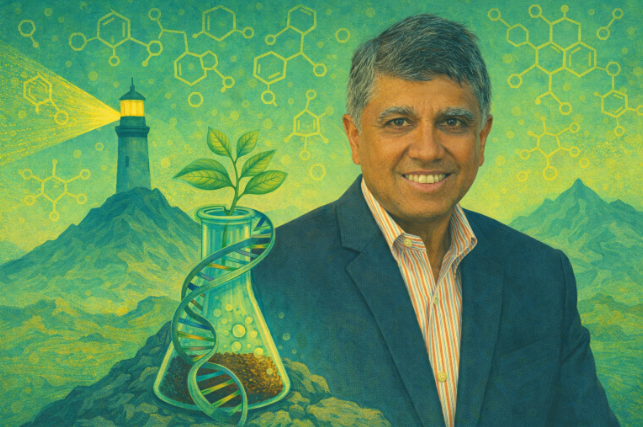
Every breakthrough drug begins long before a clinical trial—often with a small structural idea on a chemist’s desk and a question no one yet knows how to answer. Will this molecule interrogate the target? Potent enough? Stable enough? Be safe enough? Will it do in humans what it does in animals? Will it make any difference at all?
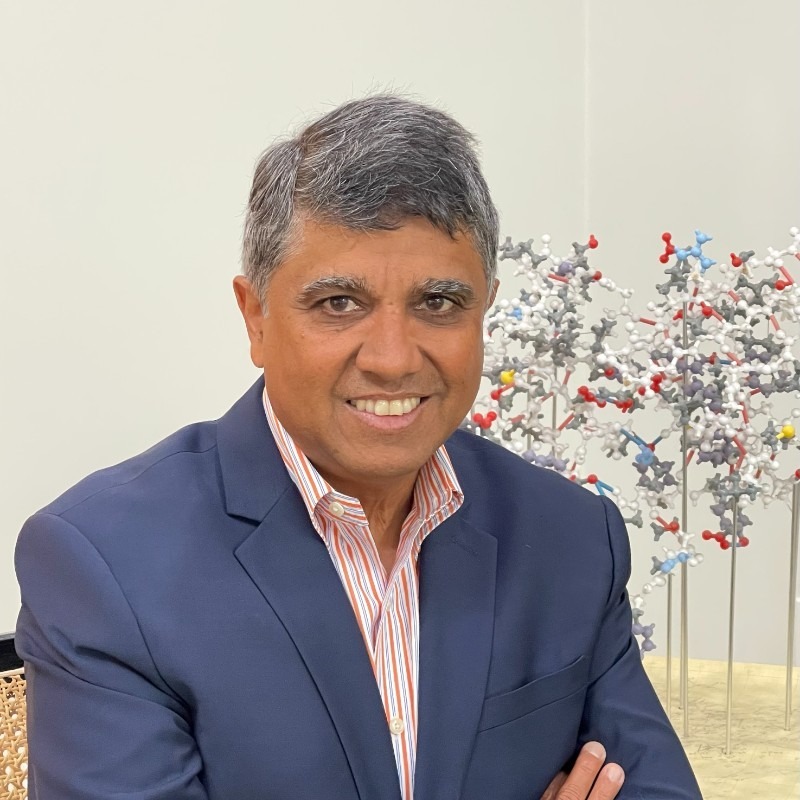
Over the past three decades, few people have guided more of these questions into real-world outcomes than Dr. Ravi Nargund. With more than three decades in medicinal chemistry and drug discovery, Ravi has spent his career navigating one of the most complex and high-stakes arenas in science. Over 28 clinical candidates have moved forward under his leadership across senior roles at Merck and J & J Innovation (Janssen) and a Consultant and Advisor at biotechs,, where he guided portfolio strategy, built high-performing discovery teams, and helped shepherd programs from target validation through clinical development.
Today, as Senior Chemistry Advisor to FAR Biotech, Ravi brings a rare combination of scientific depth, strategic judgment, and a deep commitment to improving patient lives. In this conversation, he reflects on the realities of drug discovery—the setbacks, the breakthroughs, the patterns that endure, and the areas where the field is changing faster than ever before.
You’ve advanced more than 28 clinical candidates in your career. Looking back, what’s been the most rewarding part of that journey?
RN: My parents used to emphasize two tenets to my siblings and I while growing up. First, chase impact and second, success requires a team effort. I have always strived to make an impact for patients and sought out any opportunity to make that materialize. Navigating the ups and downs of drug discovery is easier with a team that can keep their eye on the ultimate goal - impact for patients. That is what ultimately makes drug discovery rewarding even when it’s challenging.
What qualities did you look for in a molecule or a program that signaled it might actually make it into the clinic?
RN: Quality is everything. This applies across the board. From having a thorough understanding of target biology, exploring potential molecules, designing trial studies, through manufacturing. Across the board, quality is one of the key determinants of success.
Quality is made up of several factors. Of course, the primary ones are efficacy and safety. Any molecule entering clinical studies must be exceptionally safe and there should be no compromise on that.
Clinical efficacy, feasibility, and other factors rely on having a robust knowledge of prior work in the space. Taking the time to really understand the underlying mechanisms, prior failures, and opportunities for improvement help inform what projects to pursue. So start with safety as a benchmark and iterate to achieve the highest quality.
How can you tell if something is safe early on?
RN: There are standard protocols we follow. We do a number of tests to de-risk molecules, but ultimately, we rely on long-term animal studies—rodents, non-human primates, dogs, and today even mini pigs. Their physiology and biology often have meaningful relevance to humans. There’s a long history of such testing having predictive value for human safety, and we tend to rely on that. However, predictive tools and AI/ML protocols are making a very significant impact now.
Pharma R&D is often described as “high-risk, high-reward.” From your vantage point, what helps manage that risk?
RN: Risk is managed first by focusing on targets and biology that are clearly relevant to humans. I’ve worked on targets that looked promising based on preclinical data, but didn’t translate robustly in humans. So I always emphasize the need to understand whether the biology in question truly connects to the disease we are trying to impact.
Once that’s established, the next step is the molecule itself. We like molecules that are clean, potent, and active at low doses—that gives flexibility to push dosing higher in clinical settings and really test the hypothesis.
Over the past three decades, what’s changed the most in drug discovery, and what hasn’t changed at all?
RN: What hasn’t changed is the need for deep knowledge and passion. Drug discovery still depends on people who have that fire and the skills to keep going despite setbacks. Like I said in the beginning, success requires a team effort. There have always been a subset of “drug hunters”—maybe 25 to 30 percent of the community—who can do it again and again.
What’s changed is everything around them. Our understanding of biology, the sophistication of automation, and the integration of data science and machine learning have transformed how we generate and interpret data. The pace at which we can make decisions—whether to advance or stop a program—has become much faster and more refined.
And this is still the beginning. Science keeps moving. I’m very hopeful we’ll soon be able to tackle even more complex problems. If you had told me ten years ago that some of today’s advances were possible, I wouldn’t have believed it. But now, my expectations are even higher as what we are able to achieve continues to expand.
You’ve worked across oncology, neuroscience, and other therapeutic areas. Which areas feel most ripe for new breakthroughs today?
RN: That’s a loaded question! I think breakthroughs are happening everywhere. Just look at cardiometabolic diseases—take obesity, for example. The impact of the GLP-1 class has been phenomenal.
Personally, I’d love to see more impact in neurodegeneration—Parkinson’s, Alzheimer’s—and in psychiatric diseases, where major medical needs remain. Fibrotic and end-organ complications—kidney, heart failure, liver—are also areas where advances could be hugely meaningful.
So it’s hard to single out one area. Neuroscience, immunology, and fibrotic diseases all feel ripe for significant progress.
The evolving process of discovery and development and making it more efficient and truly decision-making in way that we can reduce timelines of projects and milestones will certainly deliver results,
Many younger scientists are entering the field at a time of huge technological change. What advice do you give them about building a career in medicinal chemistry?
RN: Be driven first by your ability to create clinical impact. Keep your eye on that goal, patients.
Beyond that, remain focused, adaptable, and multilingual in your thinking. Medicinal chemistry today requires you to bridge disciplines—chemistry, data science, computational methods, machine learning. Don’t get pigeonholed into one way of doing things.
Evolve as science evolves. Be a change agent. If you stay curious and adaptable, you’ll become stronger at the core—and that strength is what helps you create lasting impact.
Be mobile! Your tenure in drug discovery is short. Look for opportunities where you make a good fit and vice versa the organization and culture.
Collaboration across disciplines—chemistry, biology, informatics—has become more important than ever. How do you see that dynamic evolving?
RN: Medicinal chemistry has always been a team sport. We work closely with therapeutic area biology, pharmacology, drug metabolism, safety, modeling, and informatics.
What’s different now is that success increasingly depends on understanding and appreciating those other disciplines—not just partnering with them. The scientists who thrive are those who build a deeper understanding of their collaborators’ work and value their expertise.
You can’t operate in a silo anymore. The impact comes from true collaboration across fields.
If you had a blank slate today to design a drug discovery organization, what would you do differently than you could 20 years ago?
RN: I’d say about 30 to 40 percent would remain the same—the fundamentals of chemistry and pharmacology still matter. But the rest would look very different.
It’s less about organizational structure and more about people. I’d focus on building teams with both talent and passion, but also open-mindedness. You need specialists, yes—but also scientists who are quick to adapt, willing to embrace data science, machine learning, and other new tools.
AI is a broad term, but understanding what it really means in practice is key. I’d want a team that’s skilled, passionate, pragmatic, and ready to evolve.
When you think about the next decade, what excites you most about the future of drug discovery?
RN: I think we’re going to crack some very significant problems. I’m currently involved in projects that aim to make “undruggable” targets druggable—and we’re making progress.
In the next ten years, many of the targets once labeled undruggable will become tractable because our strategies and modalities are evolving so quickly. Think molecular glues, PROTACs, mRNA, LNP delivery systems, CRISPR, gene editing—you name it. And our weapon - synthetic organic chemistry! I am in awe to see the many successful examples of making C-C, C-N, C-O and relevant chemical bond forming reactions and applications in total synthesis, chemical biology, and drug discovery.
These weren’t even on the horizon not so long ago. I expect we’ll continue to see breakthroughs, and I want to be part of that ongoing revolution in drug discovery.
Ravi’s perspective is a reminder of both the complexity and the promise of modern drug discovery. While the fundamentals of chemistry and biology still matter, the tools, data, and modalities available to scientists are expanding rapidly—opening doors that were closed for decades. His reflections offer a grounded, candid look at what it takes to translate ideas into clinical impact, and what the next decade of progress may hold.
We’re grateful to have Ravi as part of FAR’s hands-on advisory community and appreciate the knowledge, clarity and experience he brings to our work. His insights continue to shape how we think about opportunity, risk, and the future of therapeutic innovation.


