Beth Fischer of WARF on Turning Science Into Something the World Can Use
Some of the most important scientific discoveries begin long before there is a company, a product, or even a clear path to market. They start in university labs, where researchers are asking fundamental questions about biology, disease, and how the world works.
The challenge is what comes next. Turning promising science into something that can ultimately reach patients can require intellectual property, funding, drug development expertise, market need, and regulatory strategy—and the right commercial partners all play a role. Bridging that gap between discovery and impact (sometimes referred to as the “valley of death”) is a challenge universities, investors, and life sciences companies have been working to solve for decades.
Few organizations have as much experience at that intersection as the Wisconsin Alumni Research Foundation (WARF). Founded in 1925 to move discoveries from the University of Wisconsin–Madison into the world, WARF has spent a century supporting the translation and commercialization of university research.
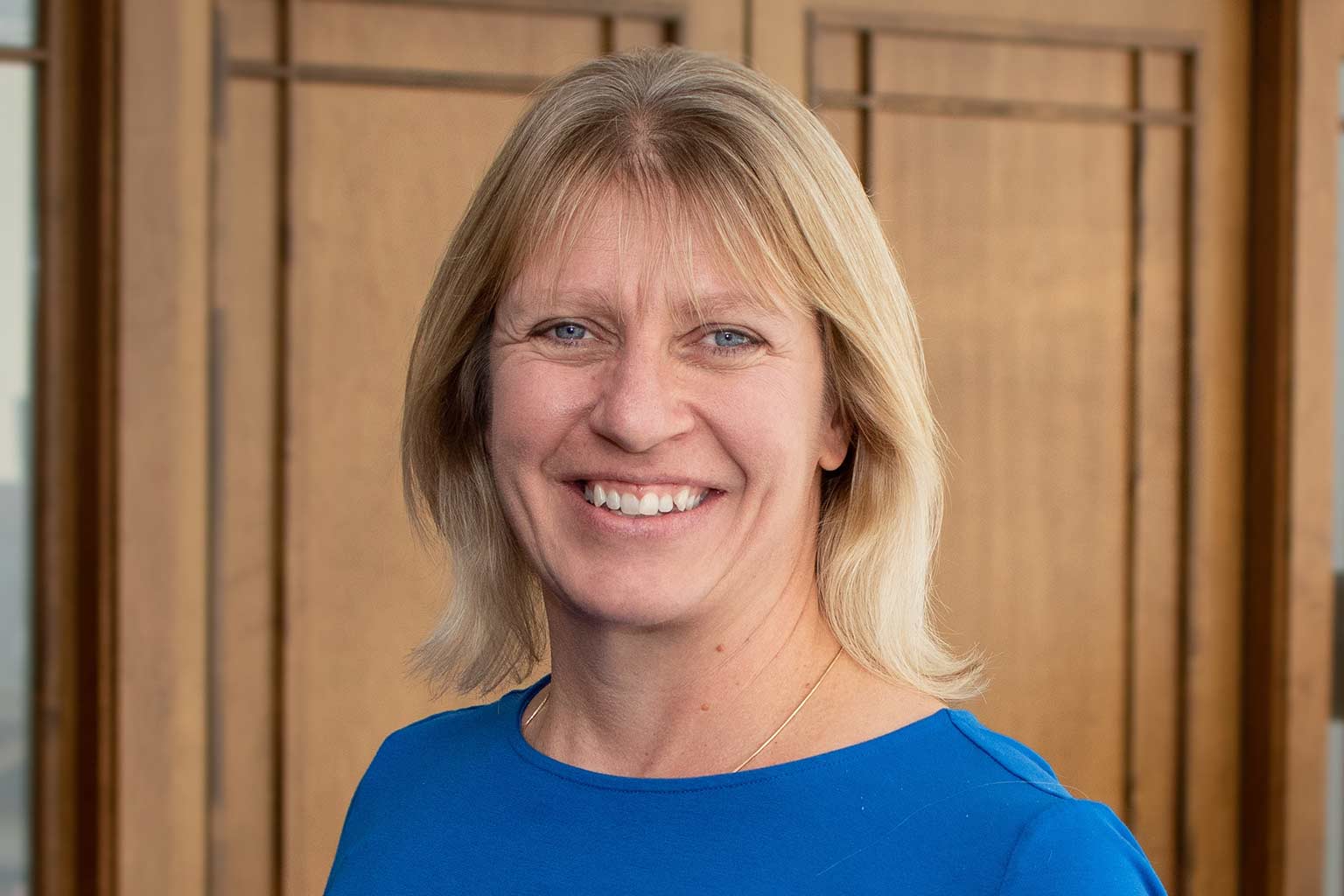
Beth Fischer has had a front-row seat to that work for more than 20 years. As Director of Life Sciences Intellectual Property at WARF, and a UW–Madison-trained biochemist herself, she works closely with researchers navigating the path from scientific discovery to intellectual property, therapeutic development, partnerships, and company creation.
We spoke with Beth about how that path has changed, the role WARF Therapeutics is playing in helping promising academic science move closer to drug development, where she sees momentum across Wisconsin’s biohealth ecosystem, and the emerging areas of science that she believes could shape the next generation of therapeutics.
You’ve spent more than two decades at WARF, after beginning your career in licensing and corporate development in the life sciences. What originally drew you to the intersection of science, intellectual property, and commercialization—and what has kept you interested in this work?
BF: I’ve always loved science. I grew up in a rural area, loved animals, and when I was a little kid I thought I was going to be a veterinarian. I went to Ripon College and majored in chemistry, with the plan at that point of becoming a medicinal chemist. My dad was a pharmacist, so I grew up around pharmacies and always found that whole space fascinating.
As an undergraduate, I spent a semester doing synthetic organic chemistry research at UC Santa Barbara. I loved Santa Barbara, but realized I didn’t love doing synthetic organic chemistry. I still wanted to go to graduate school and continue learning about science, so I came to UW–Madison in 1995. I’ve now been in Madison for 30 years.
I entered the biochemistry program assuming I would become a bench scientist, but about midway through my PhD, I realized that wasn’t the right path for me. I still loved science—I loved asking questions and learning—but I didn’t love the day-to-day work at the bench.
Fortunately, I was in Hector DeLuca’s lab, and he was very interested in commercialization and translating science into products, primarily pharmaceuticals. At the time, not every professor was as open to the business side of science, but Hector was very supportive of me exploring other paths. That gave me some exposure to the idea that I could stay close to science without necessarily being a bench scientist.
I started exploring patent law, intellectual property, and business, and thinking about how scientists can be involved in translating discoveries into products. As I was finishing my PhD, I had the opportunity to join a Madison biotech company called PanVera, where I worked in licensing. They were willing to take a chance on a scientist who was naturally curious about how science could be applied to business and the marketplace.
That experience gave me exposure to the intersection of science, intellectual property, and commercialization, and I knew I wanted to stay in that space. Eventually, that brought me to WARF.
What has kept me interested is the opportunity to see such a broad range of science and ask: How do we take this amazing research and help to mature or translate it in a way that can reach the marketplace and ultimately improve people’s lives? I still find that fascinating.
From your vantage point working closely with researchers across UW–Madison, what are some of the university’s biggest priorities in the life sciences today? Where are you seeing particularly strong momentum or ambition?
BF: UW–Madison has historically had such strength in the life sciences. You can trace some of that back to its roots as a land-grant institution, with an early focus on agriculture and the mechanical arts. That history helped build deep strengths in areas like nutritional sciences, plant biotechnology, animal health, and other parts of the life sciences.
What I always get excited about is the diversity of research across campus. We have the School of Medicine and Public Health, the School of Veterinary Medicine, the School of Pharmacy, the School of Nursing, the College of Agricultural and Life Sciences, and so many other schools and colleges contributing to life sciences research. The breadth is really remarkable.
Within that, there are a few areas where I see particular strength and momentum. Infectious disease is one. There is tremendous work happening here around bacteria, fungi, and viruses, spanning everything from basic biology to more applied research. The fungal research in particular is very strong. And that work is relevant not just to human health, but also to plant health, animal health, and environmental health.
Another area is cell therapies and regenerative medicine. Even before Jamie Thomson first isolated human embryonic stem cells here, UW–Madison had deep expertise in cell biology. That discovery accelerated the field, and the university has continued to build on it. Today, the work extends across cell therapies, regenerative medicine, engineering, basic biology, and clinical research.
There are many other areas of strength, but when people ask me what stands out about UW–Madison, I always come back to the diversity and depth of the research across the university.
Therapeutics can have an especially long and complex journey from an academic discovery to something that ultimately reaches patients. How does WARF think about identifying and advancing promising therapeutic discoveries, and what tends to distinguish the opportunities with real commercial potential?
BF: That is a great question, and I wish I had a rubric I could point to that would predict success. That would be fantastic for everyone involved.
I think the best way to answer it is through the evolution of therapeutics at UW–Madison and WARF. The university has always been very strong in the foundational science that underpins therapeutic development: understanding disease mechanisms, identifying biomarkers, studying proteins and pathogens, and identifying the biomolecules that could potentially be targeted to improve a disease state.
When I started at WARF 21 years ago, we could patent much of that foundational work, including drug targets and modulators developed against those targets. That was important because patents provide the potential market exclusivity needed to incentivize companies to invest the hundreds of millions of dollars it can take to move a drug through clinical development.
But patent law is dynamic, and over time, court decisions interpreting patent law made it much harder to protect some of that foundational research. That forced us to think differently about how to translate strong academic science into a commercially viable therapeutic asset.
We began investing in work that helped researchers to identify molecules capable of affecting those biological targets. That generated a lot of valuable scientific insight, but we also learned that an interesting research molecule is not necessarily something that can become a clinically relevant drug.
That growing gap between strong foundational research and a commercially viable therapeutic is really where WARF Therapeutics came in. We brought in people who had spent their careers in the pharmaceutical industry and could apply the same kinds of questions pharma companies ask when deciding which programs to advance.
One of the first things we ask now is: How validated is this target or therapeutic strategy for human disease? Much early-stage research happens in cells or animal models, and the challenge is understanding how likely that biology is to translate into humans. There are so many reasons drugs can ultimately fail: the target may be expressed too extensively in the body, the molecule may not stay where it needs to be long enough, or the biology simply may not translate as expected.
We are also much more methodical about understanding the commercial and clinical context. What is the unmet clinical need? Which patients are we trying to treat? What is the current standard of care? Where would this therapeutic fit? What might the clinical trials and regulatory pathway look like? Who is going to pay for it?
The goal is to ask those questions earlier so we can identify opportunities where investment can meaningfully advance the program and ultimately make it attractive to an industry partner, whether that is an investor willing to help create a startup or a pharmaceutical company that could bring the program into its pipeline.
Where does WARF Therapeutics fit into the drug discovery process, and what gap is it designed to help bridge between promising academic research and therapeutic development?
BF: Before WARF made a significant commitment to this work and brought in people with drug development experience, these conversations could be very difficult. Academic researchers are doing exciting, important science, and they are often deeply motivated by the potential to help patients. But they are not necessarily drug developers.
The questions that need to be answered in drug development are not always the most scientifically interesting questions, and the process for moving a therapeutic forward is fairly well established. That does not always align naturally with academic research. There is also the practical challenge of funding: who is going to pay for the millions of dollars of preclinical work needed before you even get to clinical development, where the costs rise dramatically?
In the past, a researcher might come to me with a fascinating target or therapeutic strategy, and I would think, “I love this, but I don’t yet have an avenue to translate it into a commercially viable asset that we can partner.” We could encourage them to continue the research, but there was a real gap.
WARF Therapeutics helps to fill that gap. Now I have access to people with pharmaceutical and preclinical development experience who can help researchers understand the questions they need to be asking much earlier. Even if a project does not become a full WARF Therapeutics program, that expertise can still help faculty think differently about how to use their limited time and resources to move the work as far forward as possible.
They can better understand what pharmaceutical companies will be looking for, what evidence matters, and what questions need to be answered before a program is ready for the next stage.
We also have a WARF Therapeutics scientific advisory board with experience across industry and academia. That has become an incredibly valuable resource, and I think there is a lot of opportunity to partner with academic researchers in different ways to help promising therapeutic research move forward.
Are there particular technologies, companies, or commercialization stories from UW–Madison that have stayed with you over the years?
BF: It depends a little on how we define success. If success means a product ultimately launched with success in the marketplace, there are certainly examples. I think about companies like Third Wave, NimbleGen, and TomoTherapy. Some of those technologies did make their way into products and into the market.
But some of my favorite stories are not necessarily the ones with the cleanest commercial ending.
One of my favorite technologies came through during my first year at WARF. It involved stimulating parts of the brain in a way that could induce and maintain deep sleep, using very soft electrical or auditory stimulation. I used to call it the science of white noise. The technology was fascinating.
We filed a patent, licensed the technology to a company, and they spent probably seven to 10 years developing it into a product. They eventually launched it, but the product did not get the traction they had hoped for, for reasons that were more about the business than the science. The science itself was fantastic.
Another story I often think about is Stratatech, a company spun out of UW–Madison by faculty member Lynn Allen-Hoffmann. She worked on that company for many years, and I know a lot of people who probably would have given up along the way. She didn’t. She was incredibly passionate about the technology and eventually built the company to the point where it was acquired by a larger company.
For me, that is still a success story. Commercialization is hard, and the eventual outcome of a product or company does not always reflect the quality of the underlying science or the work it took to move that technology forward. Those are some of the stories that have stayed with me.
You’ve watched Wisconsin’s biohealth ecosystem evolve for more than 20 years. What has changed most during that time, and what does Wisconsin need next to help more promising science become successful companies and products?
BF: When I came out of graduate school and joined PanVera in University Research Park, I got to see a number of smaller life sciences companies in the area. A lot of them were focused on research tools, which made sense given the scientific strengths at UW–Madison and the presence of companies like Promega that had already built strong businesses in that space.
Then there was a period where startup funding became much harder. I don’t think that reflected the quality of the science here as much as changes in the broader investment environment. More recently, I think we’ve seen that momentum come back.
One reason is that there is much more emphasis now on entrepreneurship and the role startups play in moving technologies forward. From WARF’s perspective, we’ve also seen an evolution in how larger companies operate. In many industries, there has been consolidation, and large companies are often less interested in taking on very early, risky technologies themselves. They increasingly want technologies to be de-risked first, often through a startup.
That has made entrepreneurship critically important for technology translation from the bench to commercial partnerships. At UW–Madison, there is a strong focus on encouraging students, postdocs, and faculty to think like innovators: to ask how their research might be applied and think about what would be required to move a technology toward a product.
WARF has evolved in the same way. We have supported spinout companies for decades, but today our venture work is much more formalized and methodical. It’s not just about financial support; it’s also about building networks, bringing investors into the community, and helping them see that there is extraordinary science and opportunity here in Madison.
I think there is a lot of momentum right now. The next step is really about people and capital. We need more serial entrepreneurs because success tends to create more success. When founders build and exit companies, they often want to do it again, and that experience compounds over time.
We also need more venture investment coming into Wisconsin. WARF, UW–Madison, and others in the ecosystem are working to build relationships with investors nationally and raise awareness that this is not just “flyover country.” There are tremendous technologies and opportunities here.
So, if I had to simplify it, what Wisconsin needs next is more experienced people and more capital. Those are the ingredients that can really accelerate the growth of the biohealth ecosystem.
When you look across the research coming through WARF today, what scientific areas or emerging technologies are you personally most excited about? Are there developments that you think could meaningfully change how we discover or develop new therapies over the next decade?
BF: Two areas I’m particularly excited about right now are psychedelics and new approach methodologies (NAMs) for studying diseases and developing therapeutics that do not utilize animals for medical research.
There is fascinating research happening around psychedelics and how to take medicines that have been important to many cultures historically and add the clinical science needed to better understand their potential as pharmaceuticals. UW–Madison has had active work underway around psychedelics in the context of mental health and addiction, and that area continues to grow. I think there is tremendous opportunity there, and I’m hopeful that this research can ultimately lead to therapies that reach people who need them.
The other area is non-animal models for disease such as organoids and related technologies like organ-on-a-chip and microphysiological systems. One of the biggest challenges in therapeutics is translating what we see in a preclinical animal model into something that actually works in humans.
Microphysiological systems allow researchers to take human cells and grow them into small, three-dimensional models that can better reflect human biology. For example, you can take cells from a tumor, grow them into a mini tumor, and test potential drugs against that model.
My hope is that technologies like organoids, combined with advances in AI and data analysis, will help us predict earlier which therapeutic candidates are most likely to succeed in humans. If we can improve that prediction, we may be able to avoid some of the costly failures that happen much later in development.
That work also plays to UW–Madison’s strengths because it brings together engineering, cell biology, and other disciplines. There is some amazing research happening in that space.
Scientists, investors, and industry partners often view opportunities through different lenses. What do you wish researchers and early-stage companies understood earlier about turning strong science into something others can invest in, partner around, or commercialize?
BF: Translating research into the marketplace is exciting and incredibly rewarding, but it is also hard. There are challenges, frustrations, and failures along the way.
One of the biggest things I encourage researchers to think about is the market need. How does your technology, and the technical advantage it offers, actually address that need?
Researchers are always asking questions and trying to advancing their science. But if you are thinking about moving a technology into a startup and want others to invest in its development, you need to understand what an investor or large company will need to see to justify that investment.
What data do you need to generate to demonstrate that the technology works the way you think it does? And can you show that it addresses a market need that a potential partner also recognizes?
I think asking those questions earlier can be incredibly valuable. They are not always easy questions to answer, but understanding the market alongside the science can make a real difference in how effectively a technology moves forward.
A sincere thank-you to Beth for taking the time to share her perspective and for giving us such a thoughtful look at how science moves from discovery toward real-world impact.
We’re grateful for her insights, her candor, and the work she and the WARF team continue to do to support researchers, advance promising technologies, and strengthen Wisconsin’s biohealth ecosystem.


